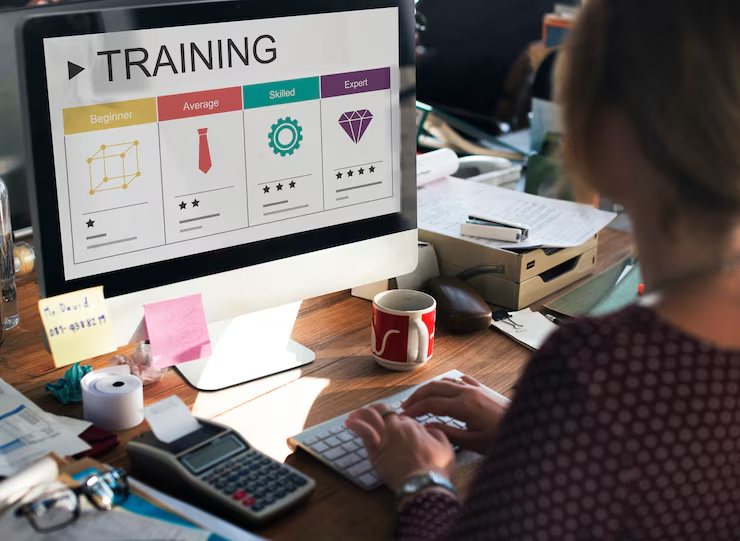
In today’s evolving workplace, technical expertise alone is not enough. Employees need strong communication, collaboration, adaptability, and critical thinking skills to work effectively, solve problems, and drive meaningful outcomes.
At Zillion, we design power skills training that helps individuals develop the essential human capabilities needed to succeed in modern work environments. Our programs focus on real-world application, enabling employees to communicate clearly, collaborate effectively, and adapt to change. As a result, organizations build stronger teams, improve productivity, and create a workforce that can navigate challenges with confidence.
Power skills, also known as soft skills, are essential to how workers interact, make choices, and support the success of the team. Organizations may experience communication breakdowns, decreased collaboration, and difficulties adjusting to change if these skills are lacking.
Zillion helps organizations develop these capabilities through structured training that focuses on practical application. By strengthening communication, emotional intelligence, and teamwork, employees become more effective in their roles. This leads to improved collaboration, better decision-making, and a more resilient workforce.
Power skills require practice, reflection, and application in real-world situations; they cannot be developed solely through theory. For employees to completely comprehend the impact of these skills, they must be given the chance to apply them in relevant contexts.
Our programs use interactive learning, scenario-based exercises, and real-world challenges to help employees build these capabilities. This ensures that learning translates into action, enabling individuals to communicate better, collaborate more effectively, and respond to challenges with confidence.
We help organizations strengthen power skills through practical learning, focused development, and measurable outcomes.

Zillion assesses current capabilities to understand where communication, collaboration, and interpersonal skills need improvement.

Our training focuses on real interactions, helping employees improve how they communicate, collaborate, and solve problems.

We create learning journeys that reinforce skills over time, ensuring long-term development and sustained impact.
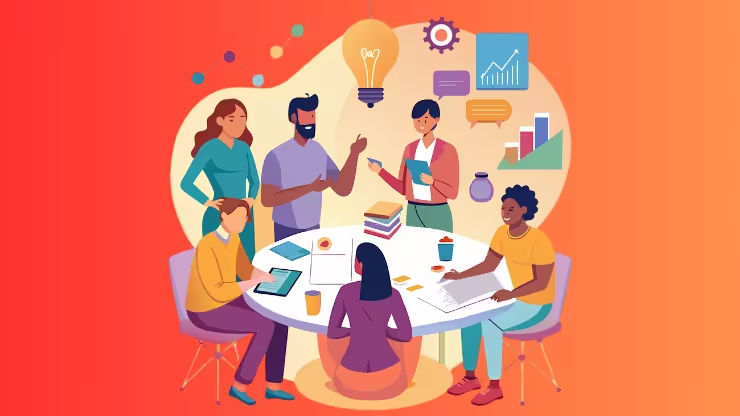
We start by understanding your workforce challenges, team dynamics, and business objectives. This allows us to design power skills programs that are relevant, practical, and aligned with your organizational needs.
Through a combination of engaging learning experiences and applied practice, we help employees develop skills they can immediately use in their roles. Our approach ensures that learning translates into improved performance, stronger collaboration, and better workplace outcomes.

We help employees communicate clearly and confidently, improving understanding and reducing workplace misunderstandings.

We strengthen team dynamics by improving how employees work together, share ideas, and achieve common goals.

We help individuals understand and manage emotions, improving relationships and workplace interactions.

We develop the ability to analyze situations, make informed decisions, and solve challenges effectively.

We prepare employees to respond to change with confidence and maintain performance in dynamic environments.

We help individuals manage priorities, improve focus, and work more efficiently.

Power skills are essential human abilities such as communication, teamwork, adaptability, and problem-solving that support workplace success.
They improve collaboration, enhance decision-making, and help employees perform effectively in different situations.
Power skills training is valuable for employees at all levels, from entry-level staff to senior leaders.
Yes, with structured learning and practice, individuals can strengthen these skills over time.
They improve communication, reduce conflicts, and enable employees to work more efficiently.
Yes, programs can be tailored to match organizational needs, roles, and specific challenges.
Improvements can be seen quickly, but continuous learning ensures long-term development.
Success is measured through employee feedback, improved collaboration, and overall workplace performance.

Instructional Designer