The Modern Challenges Reshaping Adult Learning
For decades, adult learning followed a relatively predictable model. Employees attended workshops, completed training programs, and developed skills that remained relevant for years. Learning was often thought of as an event – something that was planned, provided and finished before employees resumed their regular responsibilities. That model is becoming increasingly difficult to sustain.
Today’s professionals work in environments defined by rapid technological change, evolving business priorities, and constant access to information. Skills have shorter lifecycles, job roles continue to evolve, and learning is no longer confined to classrooms or formal training programs. As organizations adapt to these realities, they are discovering that the biggest challenge is not delivering learning. It is creating learning experiences that remain relevant in a world that rarely stands still.
Organizations are increasingly turning to custom eLearning solutions to create flexible and scalable learning experiences that support continuous skill development and changing workforce needs.
The question facing learning leaders is no longer how to provide training. It is how to support continuous development when the conditions surrounding work and learning are changing simultaneously. According to The Association for Talent Development (ATD), organizations that prioritize continuous learning are better positioned to adapt to evolving business and workforce demands.
When Information Is Everywhere, Attention Becomes the Challenge
One of the most significant shifts affecting adult learning is the sheer volume of information available to learners. Employees have access to articles, videos, podcasts, webinars, online courses, and AI-powered tools that can provide answers within seconds. In theory, this abundance should make learning easier. In practice, it often creates the opposite effect.
Many professionals spend more time filtering information than learning from it. They are faced with an endless stream of content competing for their attention, making it difficult to identify what is useful, credible, and relevant to their immediate needs. The challenge is no longer access to knowledge. The challenge is navigating it effectively.
For learning and development teams, this shift requires a different mindset. Success is no longer measured by how much content is available. Instead, it depends on helping learners find the right information at the right time and in the right context.
The Half-Life of Skills Is Shrinking
Not long ago, employees could rely on a stable set of skills throughout much of their careers. While continuous learning was important, the pace of change was often manageable. Today, that reality has changed dramatically.
Emerging technologies, automation, artificial intelligence, and new ways of working are reshaping industries faster than many organizations anticipated. Skills that were highly valuable a few years ago may now require significant updating, while entirely new capabilities are becoming essential.
This creates a unique challenge for adult learners. They are expected to remain productive in their current roles while simultaneously preparing for future demands that may not yet be fully defined. Learning therefore becomes less about mastering a fixed body of knowledge and more about developing the ability to adapt.
Organizations that view learning as an ongoing capability rather than a periodic activity are often better positioned to navigate this environment.
The Time Problem No One Has Solved
Ask almost any employee why they struggle to learn more consistently, and the answer is likely to be the same: time.
Modern professionals are balancing meetings, deadlines, projects, communication platforms, and growing workloads. Even highly motivated learners often find it difficult to dedicate uninterrupted hours to formal learning experiences. As a result, learning competes with the very work it is intended to support. This tension is reshaping expectations around learning design.
Employees increasingly expect learning experiences that fit naturally into their workflow rather than requiring them to step away from it. They want resources that solve problems quickly, provide practical guidance, and respect the realities of their schedules. Learning that feels disconnected from everyday work is often the first thing to be postponed.
The most effective learning strategies recognize that time is not simply a scheduling issue. It is a design consideration.
Adult Learners Expect More Than Content
Another challenge in reshaping adult learning is the growing gap between content delivery and meaningful learning experiences.
Most organizations have more content than they’ve ever had. But just having access to content is not enough for engagement and performance improvement. Adult learners are becoming more discriminating with their time and attention. They want learning that’s relevant, practical and immediately applicable to their jobs.
This shift is forcing organizations to rethink traditional approaches to training.
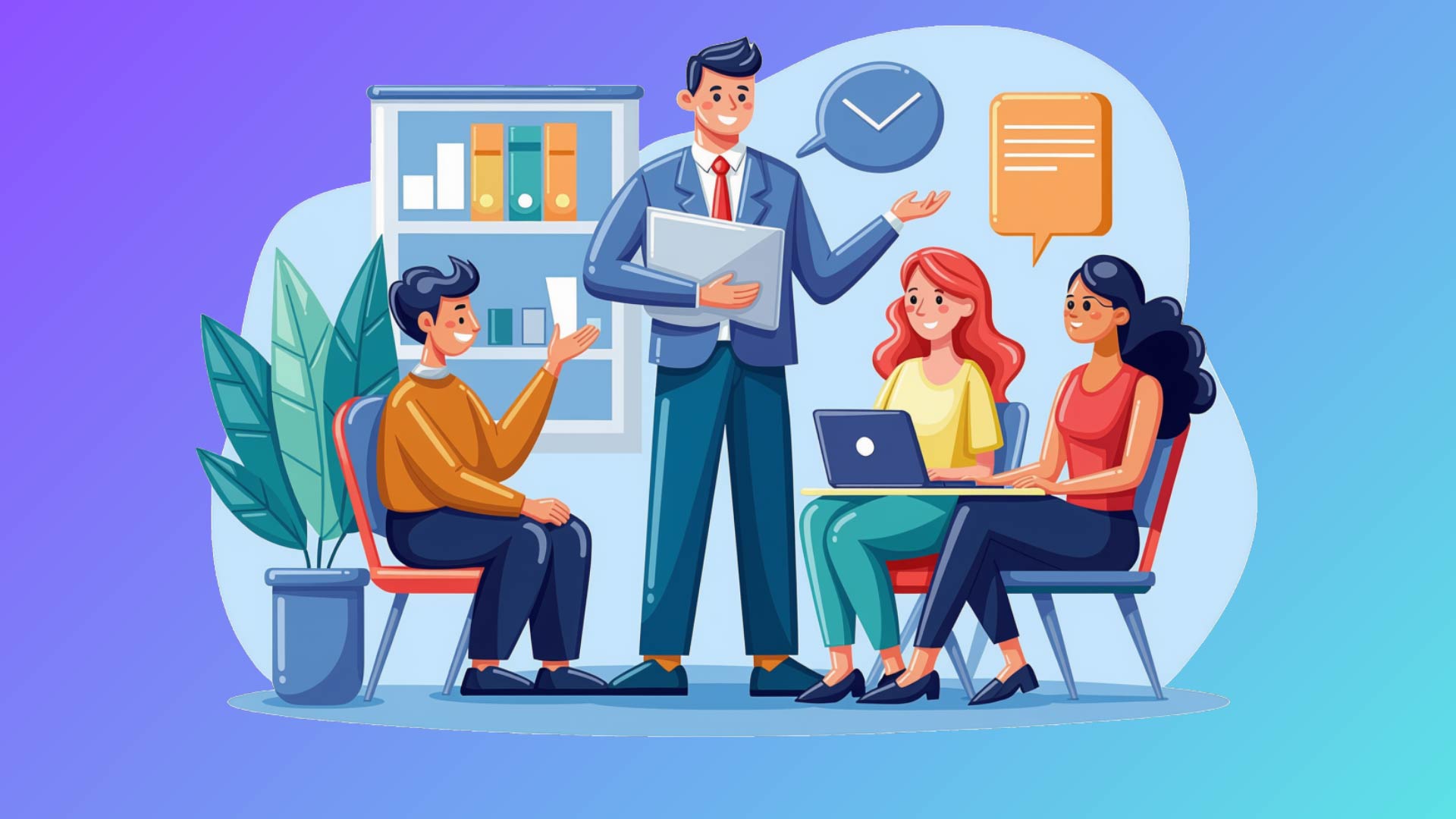
Learners are less interested in information that may become useful someday. They are looking for support that helps them solve today’s challenges. They want opportunities to apply knowledge, receive feedback, collaborate with peers, and connect learning directly to workplace performance.
In many ways, adult learners are behaving like consumers. They expect learning experiences to be intuitive, personalized, and valuable from the moment they begin.
Technology Is Changing Expectations Faster Than Learning Strategies
Technology has undoubtedly expanded what is possible in workplace learning. Artificial intelligence, adaptive learning platforms, immersive experiences, and digital collaboration tools are creating new opportunities to personalize and scale learning. However, technology is also changing learner expectations.
Employees now interact daily with platforms that anticipate their preferences, recommend relevant content, and simplify complex tasks. These experiences influence how they evaluate workplace learning. Generic learning programs that treat every learner the same often feel increasingly disconnected from the digital experiences people encounter elsewhere.
The challenge is not to adopt every new technology. The challenge is using technology intentionally to create better learning experiences. Organizations that focus solely on tools often struggle to achieve meaningful results. Those that focus on learner needs tend to see greater impact.
Learning Has Become a Continuous Capability
Perhaps the most important shift of all is that learning is no longer viewed as a separate activity from work.
The most successful organizations are moving away from the idea that development happens only during scheduled training events. Instead, they are creating environments where learning occurs continuously through collaboration, problem-solving, coaching, experimentation, and reflection.
This approach reflects a broader reality: modern careers require ongoing adaptation. Employees need opportunities to learn, unlearn, and relearn as industries evolve and new challenges emerge.
The future of adult learning will belong to organizations that recognize this shift and design experiences that support learning as an ongoing process rather than a one-time event.
At Zillion eLearning, we believe the most effective learning strategies begin with understanding how adults learn in today’s world. As technology advances and workplace expectations continue to evolve, organizations must move beyond traditional training models and create learning experiences that are flexible, relevant, and connected to real performance outcomes.
The challenges facing adult learning are significant. Yet they also present an opportunity to rethink how learning happens and how organizations can help people grow in a world defined by constant change.