Bringing Game-Based Learning into Everyday Practice
Game-based learning has been part of learning and development conversations for years. Most learning professionals understand its potential to increase engagement, encourage participation, and make learning more memorable. Yet despite this awareness, many organizations still treat it as a special type of learning experience rather than something that can influence everyday learning design. That is often where the opportunity gets missed.
When people hear the phrase “game-based learning,” they frequently imagine sophisticated simulations, digital games, virtual worlds, or highly interactive learning programs. While those solutions can be effective, they are not what makes game-based learning valuable. The real value comes from understanding the mechanics behind why games work and applying those same principles to workplace learning.
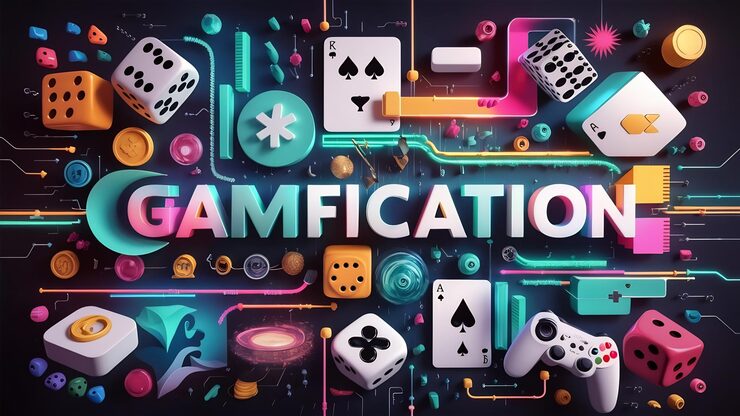
Organizations can further enhance learner engagement through Learning Games and Gamification, which introduces challenges, rewards, and interactive experiences that motivate learners and improve knowledge retention.
Games are not engaging because they are games. They are engaging because they give people a sense of purpose, challenge, progress, and control. Those elements can exist in almost any learning experience, whether it involves advanced technology or a simple discussion activity.
According to eLearning Industry, game-based learning strategies can significantly improve learner engagement, motivation, and long-term knowledge retention when applied effectively.
Why Game Mechanics Matter
Think about the last time you became completely absorbed in a game. Chances are it wasn’t because of points or rewards alone. More likely, it was because you had a clear objective, meaningful choices to make, and immediate feedback on your actions. Every decision moved you closer to a goal, and every challenge gave you an opportunity to improve. Learning works in much the same way.
People rarely develop new skills simply because information was presented to them. They learn by applying knowledge, solving problems, making decisions, and adjusting their approach based on feedback. The reason game-based learning is so effective is that it naturally supports these behaviors.
Good games also create a safe environment for experimentation. Players are expected to make mistakes, try again, and gradually improve. In many workplace learning programs, however, learners often feel pressure to get everything right immediately. As a result, they may focus on completion rather than genuine understanding.
The question for learning designers is not how to turn every course into a game. It is how to bring these powerful learning mechanics into everyday practice.
Missions Give Learners a Sense of Purpose
One of the simplest mechanics organizations can borrow from games is the idea of a mission.
Games are remarkably good at giving players a clear sense of direction. Whether the objective is rescuing a character, solving a mystery, or completing a challenge, players always know what they are working toward. At the same time, they often have choices about how they reach that objective.
This balance between structure and freedom is what makes missions so effective.
In workplace learning, missions can replace long sequences of content with smaller, goal-oriented activities. Rather than asking learners to complete a course simply because it is assigned, organizations can frame learning around specific challenges or outcomes. Learners understand the purpose behind the activity and can see how it connects to their role or development goals.
For example, a customer service program could present learners with a series of workplace scenarios instead of a traditional module structure. Each scenario becomes a mission with a clear objective, requiring learners to apply knowledge and make decisions. The learning experience feels more purposeful because learners are working toward a meaningful outcome rather than simply moving through content.
The concept is simple, but the impact can be significant. When learners understand what they are trying to achieve, engagement often follows naturally.
Progressive Challenges Keep Learning Moving Forward
A common mistake in learning design is expecting too much too soon.
Organizations often introduce complex concepts and then expect learners to demonstrate competence immediately. While this approach may seem efficient, it can create frustration and reduce confidence, particularly when learners encounter unfamiliar skills or situations.
Games take a different approach. They introduce challenges gradually, allowing players to build confidence before moving on to more difficult tasks. Early successes create momentum, while increasingly difficult challenges encourage continued growth. This idea translates well into workplace learning.
Instead of assessing a skill once and moving on, learning experiences can be structured around progressive challenges. Learners begin with a basic application of a skill, receive feedback, and then move to increasingly complex situations. Each stage builds on the previous one, creating a sense of progress while reinforcing learning.
More importantly, progressive challenges change the way learners think about failure. Mistakes become part of the process rather than evidence of weakness. Learners become more willing to experiment because they understand that improvement is expected to happen over time.
That mindset is often where the most valuable learning takes place.
Cooperative Problem-Solving Makes Learning More Meaningful
Some of the most memorable gaming experiences involve collaboration. Players work together toward a shared objective, combining different skills and perspectives to overcome challenges they could not solve alone. The same principle applies to learning.
When people discuss ideas, share information, and solve problems together, they often develop a deeper understanding than they would through individual learning activities. Collaboration encourages learners to explain their thinking, challenge assumptions, and consider alternative perspectives.
However, meaningful collaboration requires more than simply placing people into groups.
Effective cooperative problem-solving creates genuine interdependence. Each learner contributes something valuable to the solution, making teamwork essential rather than optional. This might involve assigning different pieces of information to different learners, requiring teams to combine their knowledge to reach a conclusion, or designing challenges that can only be solved through discussion and collective decision-making.
When designed thoughtfully, collaboration becomes more than a delivery method. It becomes part of the learning experience itself.
Small Design Changes Can Create Big Results
One of the most encouraging aspects of game-based learning is that organizations do not need advanced technology or large budgets to apply these ideas.
A mission can be introduced through a simple scenario. A progressive challenge can be created by breaking a skill into smaller stages. Cooperative problem-solving can happen during a workshop, virtual session, or team discussion. The mechanics remain the same regardless of the platform.
This is why game-based learning should be viewed as a design mindset rather than a specific type of training.
The goal is not to make learning feel like entertainment. The goal is to create learning experiences that encourage participation, curiosity, experimentation, and growth. When these elements are present, learners become more actively involved in the learning process and more likely to apply what they learn in real-world situations.
Bringing Learning to Life
Organizations often search for new ways to increase learner engagement. Yet engagement is rarely the real challenge. The bigger challenge is creating learning experiences that encourage people to think, act, and apply knowledge in meaningful ways.
Game-based learning offers practical solutions because it focuses on how people learn rather than simply how content is delivered. By incorporating missions, progressive challenges, and cooperative problem-solving into everyday learning experiences, organizations can create environments where learning feels purposeful and relevant.
At Zillion eLearning, we believe that effective learning is built around active participation. When learners have clear goals, meaningful challenges, and opportunities to collaborate, learning becomes more than a training activity. It becomes a process of continuous growth, improvement, and performance development.
Sometimes, the most impactful learning experiences begin with a few simple design decisions.